
Degree Overview
The Energy Systems Engineering (ESE) program prepares graduates for careers in engineering design, planning, installation and operations of various power generation and management technologies in the fast-growing energy industry, including conventional, alternative and renewable methods. They learn how to use modern engineering tools and techniques to design, implement and safely operate various energy systems.
Advanced mathematics and applied engineering courses help cadets acquire critical problem-solving skills, as well as an ability to gather, analyze, and interpret data. Design courses and field work focus on the necessary teamwork, communication, critical thinking, and ethical components to produce solutions that meet specified needs with consideration of public health, safety, and welfare, as well as global, cultural, social, environmental, and economic factors.
This knowledge is reinforced through three required Co-ops and an optional international Experiential Learning course.
The ESE curriculum includes advanced mathematics and applied engineering courses along with coursework that addresses the engineering design and implementation of conventional, alternative, and renewable energy systems.
The ESE program requires the completion of three cooperative (Co-op) learning experiences in industry that are scheduled for the students' junior and senior years. The ESE Co-op program provides the students with opportunities to learn the practical application of their studies in real-world industrial settings, establish professional contacts, and develop future employment options.
Academic Requirements
To be considered for admission to Massachusetts Maritime Academy, candidates must be capable of college-level study and meet the minimum requirements below:
- 4 years of English
- 4 years of Mathematics: Including Algebra I, Geometry, Algebra II, Precalc/Trigonometry, and Calculus by senior year of high school. At least one course must be completed during senior year. *
-
3 years of lab science at minimum, 4 years strongly recommended, to include Biology, Chemistry and Physics
- 2 years of Social Science: Including one course in United States History
- 2 years of Foreign Language: Two sequential, one-year courses in either a classical or modern language
- A foreign language waiver may be given to students attending a vocational technical high school or those who have received a waiver from their high school.
- 2 Elective Courses
- Calculus for Energy Systems Engineering
- Applicants to Energy Systems Engineering are required to take calculus in their senior year of high school to best prepare for our demanding ESEN curriculum.
How to prepare for this major:
- Four years of college prep math. Calculus is required by senior year.
- 3-4 years of lab science, including Biology, Chemistry and Physics.
- An overall GPA of 3.4 or above.
- Final grade of B or better in all math, science, engineering related courses.
The Energy Systems Engineering program prepares graduates for careers in sustainable production, conversion, delivery, and use of energy. Energy systems engineers are responsible for the safe, economical, compliant and sustainable design and implementation of various energy technologies. MMA Energy Systems Engineers can be found in every energy business sector and in every level of management throughout industry across the globe. Renewable energy firms are always seeking our graduates.
Possible career paths for an Energy Systems Engineering major include:
- Renewable Energy Technology
- Sustainable Building Design and Implementation
- Power Generation and Distribution
- Automation and Control Technology
The goal of the ESE program is to produce a competent and conscientious systems engineer who will be prepared to take on a responsible role in sustainable production, conversion, delivery, and use of energy.
At the end of the ESE Program, graduates will possess:
- An ability to identify, formulate, and solve complex engineering problems by applying principles of engineering, science, and mathematics
- An ability to apply engineering design to produce solutions that meet specified needs with consideration of public health, safety, and welfare, as well as global, cultural, social, environmental, and economic factors
- An ability to communicate effectively with a range of audiences
- An ability to recognize ethical and professional responsibilities in engineering situations and make informed judgments, which must consider the impact of engineering solutions in global, economic, environmental, and societal contexts
- An ability to function effectively in a team whose members together provide leadership, create a collaborative and inclusive environment, establish goals, plan tasks, and meet objectives
- An ability to develop and conduct appropriate experimentation, analyze and interpret data, and use engineering judgment to draw conclusions
- An ability to acquire and apply new knowledge as needed, using appropriate learning strategies.
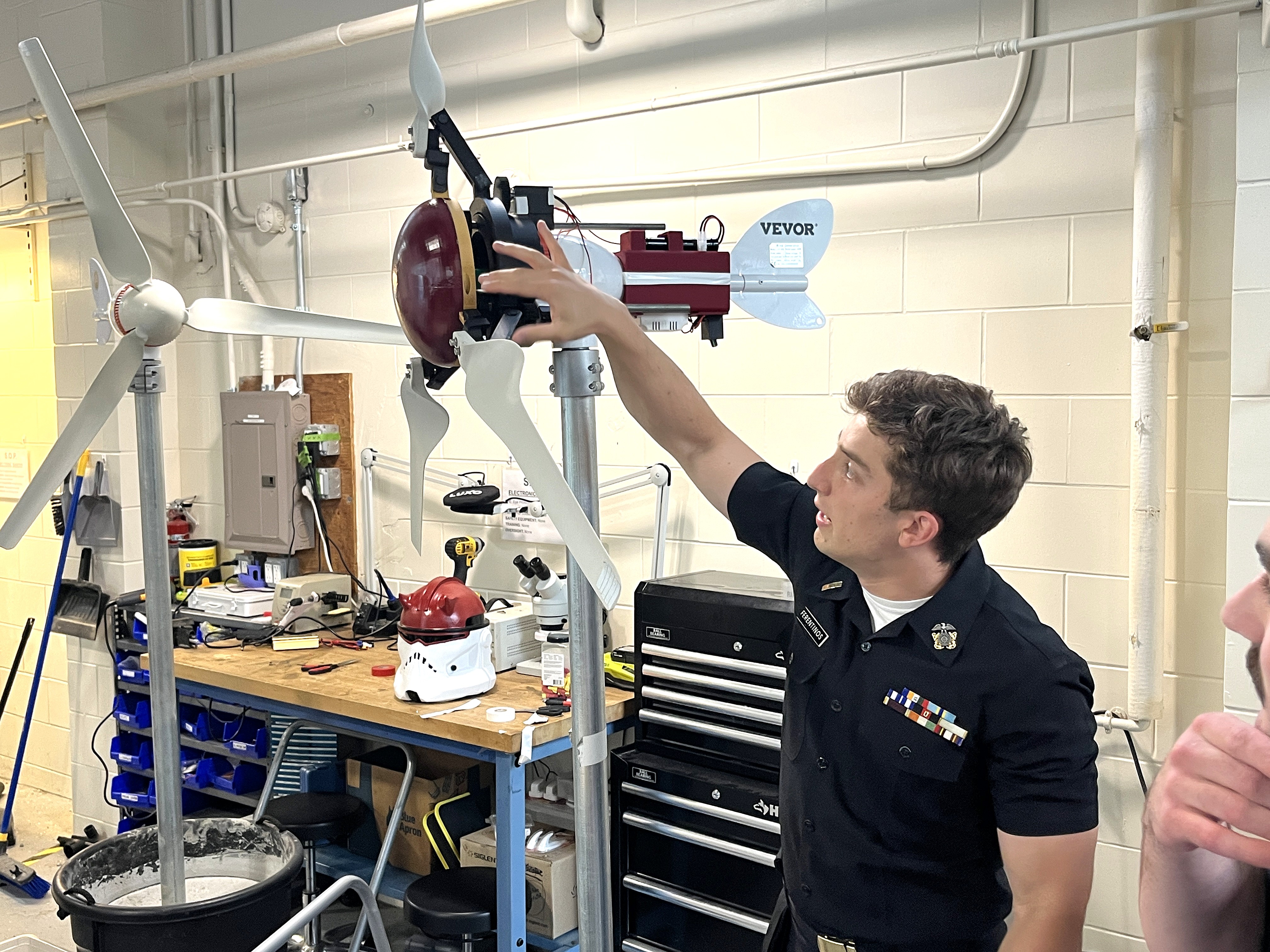
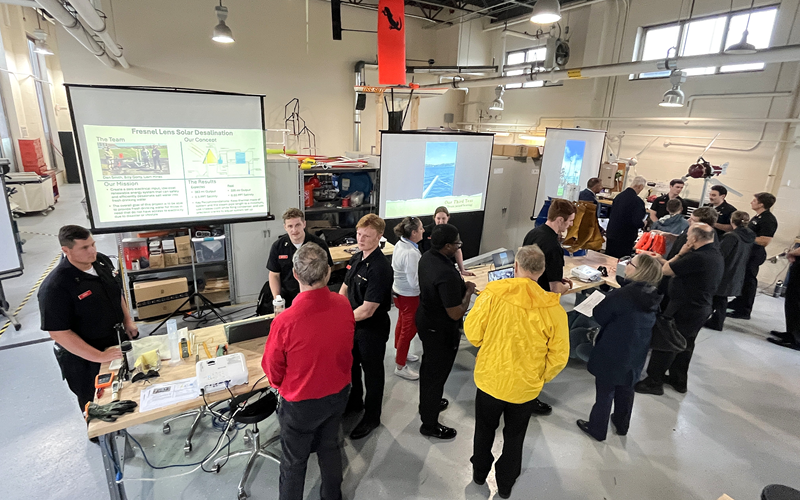
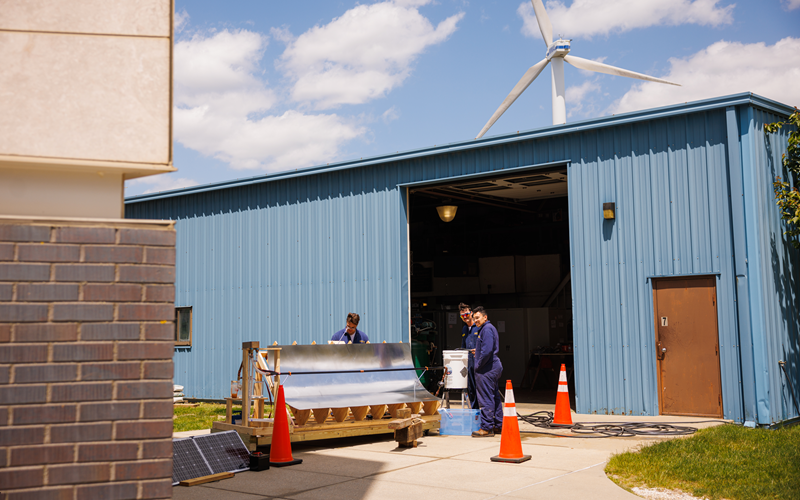
Over 40% of the ESE curriculum requires hands-on learning experiences, including 14 labs, 3 internships, plus an optional international Experiential Learning course. The lab courses include not just mechanical, electronics, CAD & computer engineering labs, but also include auxiliary & electrical machines, welding & machining, power systems, and instrumentation & controls labs. Other elective labs include diesel, turbines, boilers, and refrigeration labs. These extensive hands-on training experiences make our graduates more job-ready at graduation, resulting in higher recruitment percentages
Graduates of the program will:
- Pursue careers serving the engineering and business interests of the Commonwealth of Massachusetts, the United States, and the International Community.
- Undertake careers in the rapidly growing conventional alternative and renewable energy industries, including but not limited to positions in project design, planning, procurement, installation, testing, operations and control systems management.
- Attain professional standing and engage in lifelong learning through pursuit of higher education, job training, licenses, and certifications in energy systems engineering and all related disciplines.
- Understand their professional and ethical responsibilities and will have the ability to effectively communicate and perform in diverse environments as contributing members of our highly technical society.
This 3-credit elective course provides students a first-hand look at how Costa Rica has used its natural resources to implement sustainable energy technologies at both the local and national levels. Students will learn how this tropical community is balancing the preservation of their natural resources with the agricultural and energy needs of their society. Costa Rica offers a unique opportunity to observe a diverse spectrum of sustainable energy technologies in action, including wind, solar, geothermal, hydroelectric, carbon capture and energy storage, as well as sustainable agricultural technologies including farm-scale composting, bio-digestion and biomass-to-electricity cogeneration.
Energy Systems Engineering
Program Highlights

Additional Resources
Renewable energy companies
- NextEra Energy
- Siemens Company
Power Generation
- PSEG Nuclear
- Bellingham Power Generation.
Power Distribution
- National Grid
- Eversource
- Constellation
Defense companies
- Raytheon
- General Dynamics Electric Boat
- Portsmouth Naval Shipyard
Construction engineering
- Schneider Electric
- Subsea 7
- Dellbrook/JKS
Controls companies
- BCM Controls Corporation
- Johnson Controls
- CT Temperature Controls
Engineering companies
- LC Anderson
- TG Gallagher
- American Energy Management
- Cox Engineering
The primary professional organization associated with the Energy Systems Engineering program is the Association of Energy Engineers (AEE). The Association of Energy Engineers offers over 20 certifications that recognize expertise across a wide range of energy and sustainability specializations. AEE certifications cover several major categories and are recognized by governments, companies, and organizations worldwide:
Energy Management
- Certified Energy Manager (CEM)
- Business Energy Professional (BEP)
- Certified Industrial Energy Professional (CIEP)
- Energy Efficiency Practitioner (EEP)
Energy Services and Commissioning
- Certified Energy Auditor (CEA
- Certified Building Commissioning Professional (CBCP)
- Existing Building Commissioning Professional (EBCP)
- Certified Measurement & Verification Professional (CMVP)
- 50001 Certified Professional (50001 CP)
Sustainable Development
- Certified Sustainable Development Professional (CSDP)
- Carbon Auditing Professional (CAP)
- Certified Water Efficiency Professional (CWEP)
- Green Building Engineer (GBE)
- Certified GeoExchange Designer (CGD)
Renewable Energy
- Certified Renewable Energy Professional (REP)
- Distributed Generation Certified Professional (DGCP)
- Solar PV Professional (SPVP)
Lighting and Utility Services
- Certified Lighting Efficiency Professional (CLEP)
- Certified Demand Side Manager (CDSM)
- Certified Energy Procurement Professional (CEP)
Home Energy Efficiency
- Home Energy Professional (HEP) Certifications:
- Energy Auditor (EA)
- Quality Control Inspector (QCI)
The Energy Systems Engineering program has been accredited since its implementation in 2015 by the Accreditation Board for Engineering and Technology. ABET accreditation signifies that a program meets specific quality standards, assures employers of graduates' preparedness, and supports licensure, registration, and certification for professionals.
Students in the ESE program are required to take the NCEES Fundamentals of Engineering (FE) exam during their senior year. This examination is the first step towards a Professional Engineer license. Other professional certifications are also available subsequent to working in industry, particularly those offered by the Association of Energy Engineers (AEE).
Students in the ESE program can also take a U. S. Coast Guard (USCG) marine engineer license option with a dual major in Marine Engineering (MENG). This dual major option will require the student to participate in four sea terms during the winter sessions. During their last semester, the students would take the USCG Third Assistant Engineer's license exam.
Stay up-to-date
Stay up to date with the latest news, events, and achievements from the Energy Systems Engineering Department at Massachusetts Maritime Academy. From global experiential learning trips and industry partnerships to student success stories and faculty insights, this newsletter highlights the dynamic, global-focused education that prepares our cadets to lead in the maritime and logistics industries.
Learn More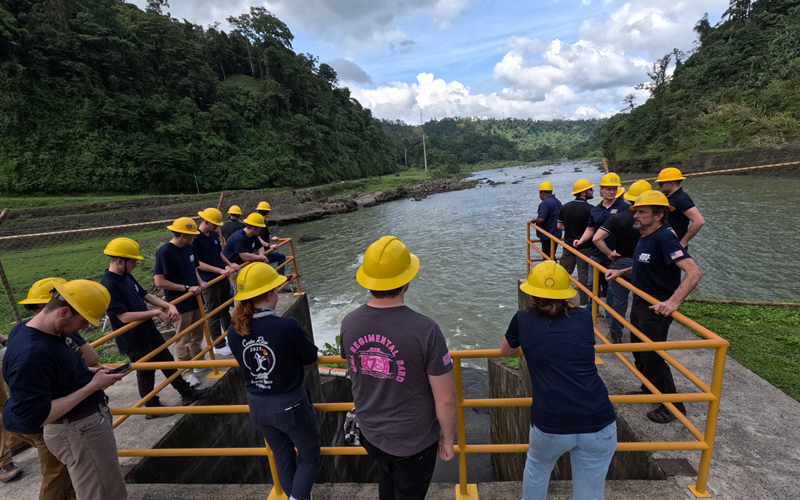

Request Information
Gain the skills you need by joining the Massachusetts Maritime Academy, a fully accredited four-year co-educational state university offering Bachelor and Master of Science degrees. Massachusetts Maritime Academy is highly regarded in the worldwide maritime industry and beyond and is equipped with state-of-the-art technology to train the next generation of industry leaders.
Learn More
Connect
There are so many ways to explore life as a future Buccaneer! Visit campus for an in-person tour, attend a virtual event, or chat with a current cadet or your admissions counselor one-on-one. Get answers about the admissions process, learn more about our majors and discover opportunities that will shape your college experience. Check out the options below to make connections and get to know Massachusetts Maritime Academy.
Learn More
Visit Massachusetts Maritime Academy
There is no better way to learn about the Academy than by visiting our beautiful, waterfront campus! Currently, campus is open for in-person tours available on a first-come, first-served basis. To register for a campus tour you will need to create an account and search under Events. If you already have an application portal, please log in using your existing credentials.
Learn More